
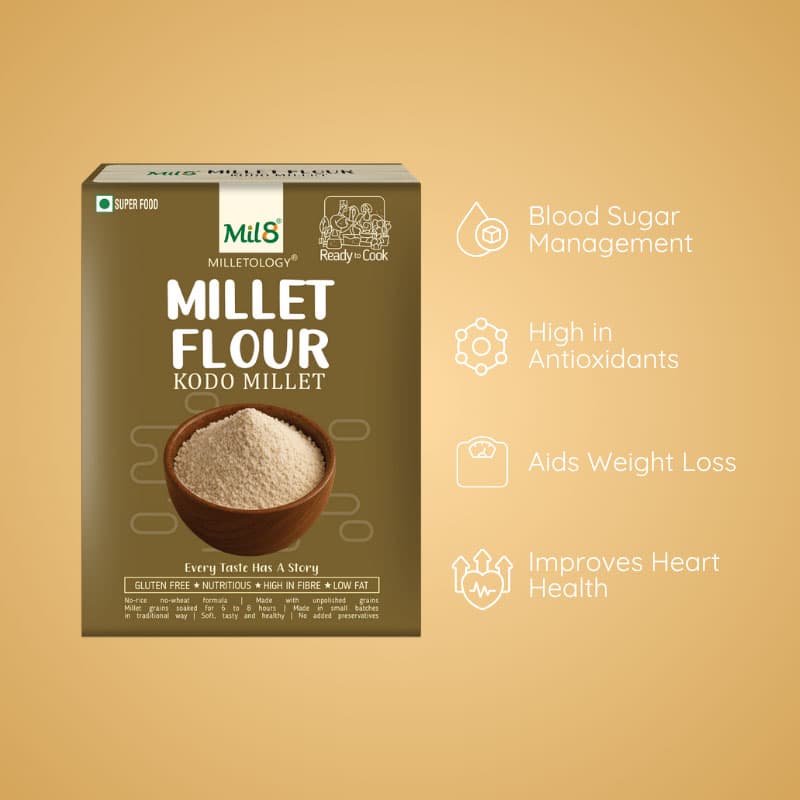
Grains · Breakfast
Kodo Millet | Varagu Flour
₹170
Inclusive of all taxes
Weight
450 g
🌾
100% Natural
🚚
Free shipping ₹499+
↩
7-day returns
Also known as:
About
Kodo millet, scientifically known as Paspalum scrobiculatum, is an ancient grain that has been cultivated for thousands of years in parts of Asia and Africa. It's a type of millet, which is a group of small-seeded grasses widely grown around the world for food and fodder.
Here are some key points about kodo millet:
-
Nutritional Value: Kodo millet is highly nutritious, rich in fiber, protein, and essential minerals like iron and calcium. It's also gluten-free, making it a suitable option for people with gluten intolerance or celiac disease.
-
Culinary Uses: Kodo millet can be cooked and consumed in various ways, similar to other grains like rice or wheat. It can be used to make porridge, upma, dosa, idli, and even fermented into a type of beer in some regions.
-
Health Benefits: Due to its nutritional profile, kodo millet offers several health benefits. It can help in managing diabetes, promoting weight loss, improving digestion, and maintaining overall health.
-
Cultivation: Kodo millet is a hardy crop that can grow in diverse climatic conditions, including regions with low rainfall and poor soil quality. It's often grown in dryland agriculture systems where other crops may struggle to thrive.
-
Sustainability: Millets, including kodo millet, are gaining popularity for their environmental sustainability. They require less water and inputs compared to crops like rice or wheat, making them more environmentally friendly.
REVIEWS & RATINGS
What customers say
Be the first to review
Share your experience and help others make an informed choice.
MORE LIKE THIS